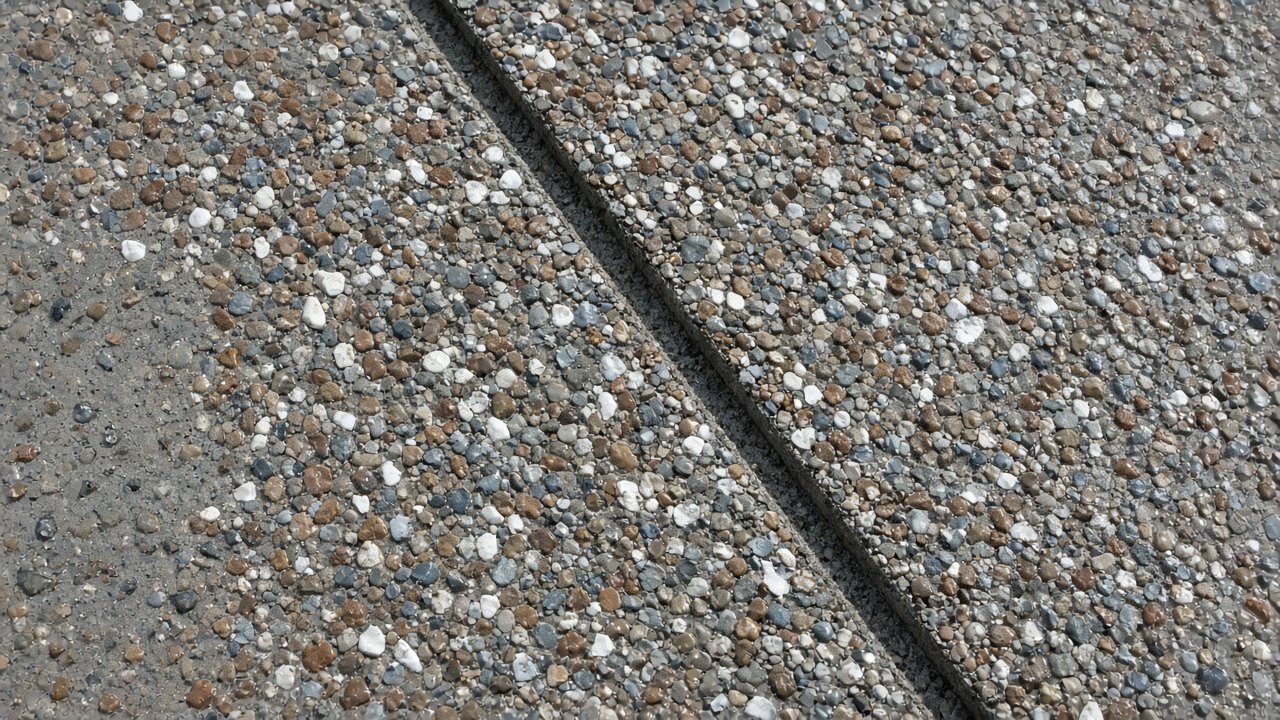
Exposed aggregate in Yarragon
Washed-stone driveways, walkways, alfresco slabs and pool decks around Yarragon and its neighbouring towns: a textured surface that holds traction in frost, disguises paddock mud and wears for decades over a sound base.
Email: info@yarragonconcreting.com.au
Stone on top, strength underneath
With exposed aggregate, decorative stone is batched into the concrete itself. After placing, and once the slab has stiffened, the skin of cement paste is rinsed or brushed off so the tops of the stones show. What you walk and drive on is real river pebble, quartz, granite or basalt, set in a reinforced slab.
Why it suits Yarragon driveways
Few finishes cope better with our conditions. Wheels bear on stone, so the surface wears slowly. The texture keeps its grip on drizzly winter mornings and white frosts. And the speckled colours camouflage clay tracked off the paddock, tyre scuffs and fine hairline cracks far better than plain grey or a single colour.
None of that excuses a weak base. Underneath, an aggregate driveway needs the same digging, rock, reinforcing, slab depth, saw cuts and grade as any well-built slab.
Honest drawbacks
– coarser to walk on barefoot than a smooth surface, worth thinking about around pools and play areas – larger stones catch leaf litter and can hold moss in shade – the wash has to be timed well on the day, or stones loosen or the finish turns cloudy – once poured, the blend is permanent – it looks richest and resists stains best when sealed
Smaller stone where feet are bare, plus a decent sealer, deals with most of these.
Driving on it
Cars can usually go on after about seven days, a little longer in a cold week, and heavy rigs such as caravans, floats and trucks need more time again. Your care sheet notes the date for your pour.
Pour day, step by step
Groundwork comes first: dig to solid ground, roll in crushed rock, set formwork to grade and chair the reinforcing. After that: – the stone mix is placed, levelled and floated so the aggregate settles evenly just under the surface – a retarding spray may go on to slow the top few millimetres – when the timing is right, the paste is rinsed away to reveal the stone – saw cuts are made in line with corners and edges – the slab cures, the cement haze is cleaned off, and sealer follows
Heavy rain or a hot northerly makes the timing tricky, so we keep a close eye on the forecast.
Aggregate versus pavers on cost
It comes down to the paver chosen, the base needed and the site itself, so a blanket comparison would not help you. A reinforced aggregate slab has no joints for weeds or ants to exploit; pavers can be pulled up and put back. We will price both if that helps you decide.
Other places it works
Walkways, side access, alfresco floors, pool decks and steps all take exposed aggregate well, and carrying one blend from the kerb to the back fence makes a property feel finished.
Your quote
After we have seen the site you will receive a written price listing groundwork, base, reinforcing, blend, finishing, saw cuts, sealer and clean-up separately.
Picking a stone blend for your home
Exposed aggregate blends are named and mixed differently by each supplier, but they fall into broad families. Warm blends of honey, cream and tan suit rendered homes, timber cladding and warm-toned brick. Cool blends of grey, white quartz and black basalt suit dark roofs, charcoal cladding and modern facades. Mixed blends with rust, brown and slate tones hide red clay mud particularly well, which matters on Yarragon farms and estates where the yard is still settling. We bring physical samples so you can lay them on the ground outside, in the light where the driveway will be.
Stone size and feel underfoot
Fine aggregates give a tighter, smoother surface that is comfortable for bare feet and easier to sweep, which makes them popular for alfresco areas and paths. Coarser stones give a bolder look and more grip on steep driveways. Many homes use one blend throughout and vary nothing else, while others pair a coarser driveway with a finer path or alfresco.
Borders and bands
A plain or coloured border around exposed aggregate frames the driveway and gives a clean edge against lawns and garden beds. Bands across the driveway can disguise joints and break up a long run. Borders also make a neat transition to a council crossover if the council standard does not allow aggregate.
How exposed aggregate is finished
The concrete is placed and levelled like any slab. Once it has stiffened enough, the surface is washed or treated so the thin layer of cement paste over the stone is removed and the top of each stone shows. Timing matters: too early and stones loosen, too late and the paste will not wash away cleanly. Saw-cut joints follow, then a clean to remove the haze before sealing.
Sealing exposed aggregate
Sealing brings out the colour of the stone, resists stains from oil and leaves, and slows moss in shaded spots. A penetrating sealer keeps a natural look; an acrylic gives a richer, wet-look finish. On driveways and paths we add anti-slip additive. Re-sealing every few years keeps the surface looking fresh.
Exposed aggregate on slopes
On steep driveways in the hills around Yarragon, exposed aggregate's grip is a real advantage over smooth finishes. We set the joints to manage stress along the slope, protect the edges from scour and consider a cut-off drain at the top to stop water running the full length.
Repairs and additions
Matching new exposed aggregate to old is difficult because blends and weathering change. When adding to an existing driveway, a contrasting border between old and new often looks better than an attempted match.
Exposed aggregate around pools and alfresco areas
Fine exposed aggregate is a favourite around pools and outdoor living areas because it stays textured underfoot when wet. We pick a smaller stone so bare feet are comfortable, keep falls away from the pool and the house, and seal with a product suited to splash and chlorine. Where the alfresco meets the driveway, carrying the same blend through ties the whole property together.
Common questions about loose stones
A few loose stones in the first weeks are normal as the surface beds in and surplus pieces wash away. Ongoing loss of stone usually means the surface was exposed too early or the concrete was poorly cured. Careful timing on pour day and good curing prevent it.
Cleaning exposed aggregate
A stiff broom and garden hose handle most dirt. For heavier grime, a pressure cleaner on a moderate setting held at a sensible distance works well without loosening stones. Moss in shady corners responds to a suitable treatment followed by a scrub. Avoid strong acids, which can etch the stone and dull the sealer.
Aggregate for steep foothill drives
North and south of the village, plenty of drives climb hard from the road. A medium or coarse stone gives tyres something to bite on in the wet, and we pair it with saw cuts spaced for the slope and a grated drain at the bottom so water does not sheet down into the garage. Where the grade is extreme, a grooved plain section at the steepest pitch can be combined with aggregate elsewhere for the look you want.
Build specification at a glance
| Digging out | Grass, topsoil and soft clay removed until we reach solid ground; buried rubble, old footings and trench backfill dealt with |
|---|---|
| Sub-base | Rolled crushed rock in compacted lifts, made thicker on Moe River silt and loose subdivision fill |
| Thickness | Matched to the heaviest load: family cars, trailers, caravans, horse floats or farm trucks |
| Reinforcing | Mesh or bar held up on bar chairs, with extra trimmer bars at corners, pits and edge beams |
| Saw cuts | Spaced to a plan and aligned with walls, the garage opening and paths; expansion strips where the slab meets the house |
| Water | Graded toward pits, grates, garden beds or roadside drains, with a trench grate where a garage sits lower than the drive |
| Surface | Finish, colour or stone blend picked on site; sealing optional, with grit added on driveways and paths |
Soils, slopes and permits around Yarragon
The village and its estates sit low between two ranges: the Strzelecki hills climb to the south toward Thorpdale and the Baw Baw foothills rise to the north toward Shady Creek. Underfoot on most town lots is dense, sticky clay, mottled yellow and grey, which puffs up after weeks of autumn rain and pulls apart into cracks by February. Near the Moe River and the creeks feeding it, the ground is a soft, wet silt. Up in the southern hills you strike crumbly red volcanic loam that drains freely until it is waterlogged, then turns to slurry on a slope. We open a test hole on each property, strip back to solid ground, rebuild with rolled crushed rock suited to what we find, and grade the surface so rain runs off it.
Work inside your own boundary seldom needs a permit. Anything over the nature strip, kerb or council footpath does: Baw Baw Shire handles Yarragon and most surrounding towns, while Moe sits with Latrobe City. Entrances onto main roads may also need the state road authority to agree, and dwellings, garages and big sheds go through a building surveyor with engineered drawings. If any of these apply, the quote spells it out.
Inside a Yarragon Concreting quote
Our quotes arrive as a written list rather than one lump figure. Each line names a piece of the job: measured square metres, demolition and carting of any old slab or gravel, excavation depth, the rock we will bring in and how thick it goes down, slab depth and reinforcing, the chosen finish and blend, where saw cuts will run, every pit, grate and pipe, edging and step work, sealer, and any paperwork with Baw Baw Shire, Latrobe City or a building surveyor. Pump hire, tight access or a temporary track for the truck get their own line.
There are no square-metre rates on this site, and that is deliberate. Around Yarragon, the hidden work under the surface swings a lot from one property to the next, so a rate quoted blind would either be padded or wrong. Once we have stood on your block, we can price what it really needs.
What you get with Yarragon Concreting
Based in Yarragon 3823
Our yard is in town, so Trafalgar, Darnum, Warragul and the hills either side are minutes away.
Ground checked on every job
Clay, river silt or red hill soil, we dig and test first and build the base to match.
Itemised quotes at no cost
Free visits, no published rates, and every part of the job written down.
Town blocks to dairy farms
Estate driveways, house slabs, sheds, yards and gateways, with permits named upfront.
From first call to finished slab
- 1
Get in touch
Ring, email or use the form, and attach a handful of photos showing the area, the street side and any tricky access.
- 2
Site visit
We measure, shoot levels, open a test hole, check drainage and truck access, and lay finish samples on the ground.
- 3
Written quote
A line-by-line price covering base, depth, reinforcing, finish, saw cuts, drains and any approvals.
- 4
Groundwork
Old surfaces and soft soil are removed, rock is rolled in layers, formwork goes up and steel is chaired.
- 5
Pour day
Trucks or a pump deliver the mix; we level it, finish the surface and keep it covered and damp as it cures.
- 6
Handover
Saw cuts made, forms pulled, the site tidied, sealer applied if included, and a care sheet handed over.
Exposed Aggregate questions
Will exposed aggregate be slippery when wet?
Generally not, because the stone gives grip. Very glossy sealers can reduce it, so we choose suitable products and add grit where needed.
Do stones fall out?
Not if the wash is timed properly. A handful of loose stones along the edges early on is normal.
Can I look at blends first?
Yes. We bring real samples to the site visit for you to compare outdoors.
Can new pebblecrete go over my old slab?
Genuine exposed aggregate needs a full-depth pour. Over sound old concrete, a decorative overlay can give a similar look.
Towns we travel to
More of what we pour
Talk to a Yarragon concreter
Site visits and itemised quotes are free across Yarragon 3823 and the Moe River valley. We leave prices off this website because every block needs its own look.